A crawl space may be out of sight, but it should not be out of mind. This area beneath a home can reveal important information about moisture, drainage, structural supports, insulation, plumbing and other systems. When problems develop below the floor, they may eventually affect the comfort, air quality and condition of the living space above. That’s why a crawl space inspection is so important.
Home Scan Home Inspections provides professional crawl space inspections in Coweta County and throughout the state of Georgia and eastern Alabama. Whether you are purchasing a home or investigating concerns in a property you already own, we provide a careful assessment and straightforward explanation of what we find.
Why Crawl Space Conditions Matter
Crawl spaces are especially vulnerable to moisture because they are positioned close to the ground and may contain plumbing, ductwork, and other building components. Water may enter through plumbing leaks, poor exterior drainage, foundation openings, groundwater, or moisture rising from exposed soil.
When these conditions go unnoticed, they may contribute to:
- Wood deterioration
- Mold or fungal growth
- Damaged or displaced insulation
- Musty odors
- Pest activity
- Corrosion of metal components
- Plumbing or HVAC problems
- Uneven or weakened floor framing
- Higher indoor humidity
- Reduced energy efficiency
Conditions in the crawl space may also offer clues about problems elsewhere. Damp soil, for example, may point to an exterior drainage issue, while staining on framing may indicate an active or previous plumbing leak.
What Does a Crawl Space Inspection Cover?
When the area is accessible and safe to enter, Home Scan examines visible components and conditions throughout the crawl space. The inspection is noninvasive, which means finished surfaces, insulation, and stored materials are not removed.
The assessment may include visible portions of the:
- Foundation walls and piers
- Floor joists, beams, and support posts
- Subfloor
- Plumbing supply and drain lines
- HVAC ducts and equipment
- Electrical wiring and components
- Insulation
- Crawl space vents
- Access opening
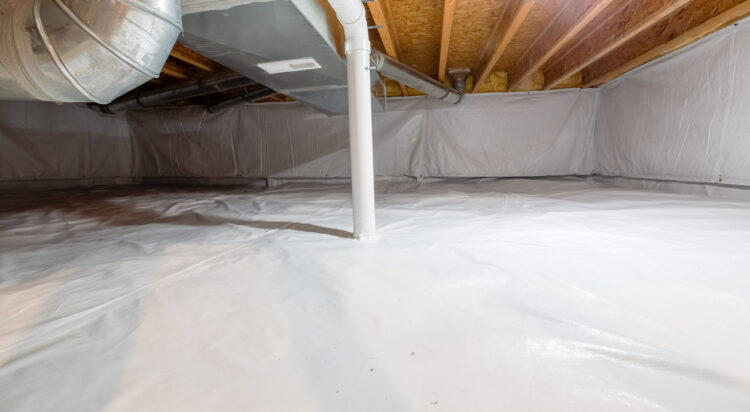
- Vapor barrier or ground covering
- Visible drainage components
We also look for evidence of standing water, excessive moisture, condensation, staining, damaged materials, visible microbial growth, and conditions that may attract pests or wood-destroying organisms.
The inspection report documents significant observations and may include photographs to help you see areas that are difficult to access yourself.
Common Crawl Space Problems
- Moisture and Standing Water — Water is one of the most significant concerns in a crawl space. It may come from a leaking pipe, clogged gutter, short downspout, improper grading, foundation seepage, or groundwater. Even when standing water is not present, consistently damp soil or elevated humidity can affect wood, insulation and other materials.
- Missing or Damaged Vapor Barriers — A vapor barrier helps limit the amount of ground moisture entering the crawl space. Missing coverage, displaced sections, tears, or poorly sealed areas may reduce its effectiveness. A vapor barrier is an important moisture-management component, but it does not correct active leaks or exterior drainage problems by itself.
- Wood Damage and Structural Concerns — Floor framing, beams, and support posts may show signs of deterioration, movement, improper alterations, or inadequate support. Because Philip brings years of contracting experience to every inspection, he can evaluate visible construction details with a practical understanding of how these components work together. A home inspection is not a structural engineering analysis. If a condition appears significant or requires specialized calculations, further evaluation by a qualified structural engineer may be recommended.
- Insulation and Ductwork Issues — Insulation may sag, fall, become compressed, or retain moisture. Ductwork may be damaged, disconnected, or affected by condensation. These issues can influence comfort and energy performance and may create conditions that deserve repair.
- Plumbing Leaks — Small leaks can continue for a long time before becoming visible inside the home. The crawl space may reveal active dripping, staining, corrosion, or previous repairs around supply lines, drains, and plumbing fixtures.
- Mold-Like Growth and Musty Odors — Excess moisture may support mold growth on wood and other materials. A crawl space inspection can document visible suspect growth and the conditions contributing to it, but visual observations alone do not identify the type of mold present. Mold testing is available as a separate service when sampling is appropriate.
- Pest and Wood-Destroying Organism Activity — Crawl spaces can provide insects and animals with shelter, moisture, and access to wood materials. We may identify visible evidence such as damaged wood, shelter tubes, nesting material, or droppings. Additional evaluation or treatment by a qualified pest professional may be recommended when necessary.
When Should You Schedule a Crawl Space Inspection?
A crawl space inspection may be helpful when:
- You are buying a home with a crawl space foundation
- You notice musty odors inside the home
- Floors feel soft, uneven or unusually cold
- Indoor humidity seems consistently high
- The home has experienced a plumbing or drainage problem
- Insulation appears damaged or displaced
- You have seen pests or signs of wood damage
- The crawl space has not been evaluated recently
- Repairs, encapsulation or moisture-control work has been completed
- You want to better understand the condition of your current home
Crawl spaces should also be checked periodically as part of responsible home maintenance. Conditions below a home can change after storms, plumbing failures, landscaping projects, or alterations to gutters and drainage.
What If the Crawl Space Cannot Be Entered?
Safety and accessibility determine how much of a crawl space can be inspected. Entry may be limited by standing water, exposed electrical hazards, suspected sewage, dangerous animals, insufficient clearance, blocked access, or other unsafe conditions.
When full entry is not possible, we inspect the visible area from the access point when practical and document the limitation in the report. Additional evaluation may be recommended after access is improved or the hazardous condition is corrected.
A crawl space inspection reflects visible and accessible conditions at the time of the assessment. It cannot guarantee that concealed damage or future moisture problems do not exist.
Crawl Space Inspection FAQs
Is the crawl space included in a standard home inspection?
Do you enter every crawl space?
Does a musty odor mean there is mold?
Does a vapor barrier solve every moisture problem?
Can you tell whether the crawl space needs encapsulation?
Should the crawl space be inspected after repairs?
Take a Closer Look Beneath Your Home
A crawl space inspection can uncover moisture, damage and maintenance concerns before they become more disruptive. Whether you are buying a property or caring for your current home, Home Scan can help you better understand the conditions below the floor. Contact Home Scan Home Inspections to schedule a crawl space inspection.